TEETH - STRAIGHTENING TREATMENT
SERVICES
RESOURCES
SHOP
MEDICAL CERTIFICATIONS
Certifications ensuring safety, quality, and compliance with global standards.

Once you embark on your clear aligner treatment, one of the utmost priorities is to maintain their cleanliness consistently. Why is this so important? Because you’ll be wearing them for at least 22 hours each day. It’s important to avoid placing anything dirty in your mouth for such an extended period.
Neglecting the care of your aligners (also known as clear braces) can lead to several unwelcome issues, such as discolouration, unpleasant odours, and even potential harm to your dental well-being. Naturally, we aim to sidestep these concerns altogether. To help you maintain your invisible aligners in pristine condition, here are some of the best ways to clean them:

One of the simplest yet most effective ways to clean aligners at home is by rinsing them with cool water each time after removing them from your mouth. This quick rinse helps dislodge any food particles, plaque, or debris that accumulates while wearing them. Regularly rinsing the aligner trays prevents staining and odor-causing bacteria buildup.

Special cleaning tablets formulated for retainer or clear braces can thoroughly sanitise and remove plaque buildup. Look for dental cleaning tablets containing ingredients like sodium sulfate. Simply soak your clear aligners in a solution with the dissolved cleaning tablet.
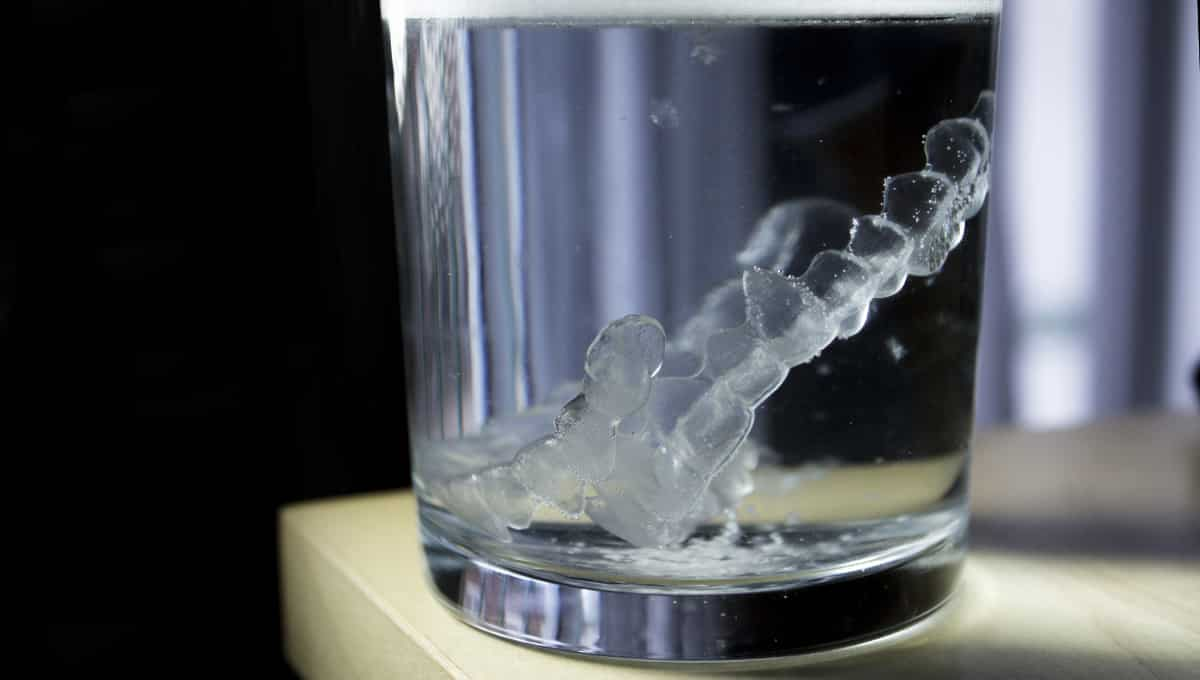
Another way to clean your invisible aligners is by soaking them in a diluted solution of mild, fragrance-free antibacterial soap and water. The antibacterial agents help kill odour-causing bacteria and freshen the clear trays. Always thoroughly rinse off any soap residue before reinserting the aligners.
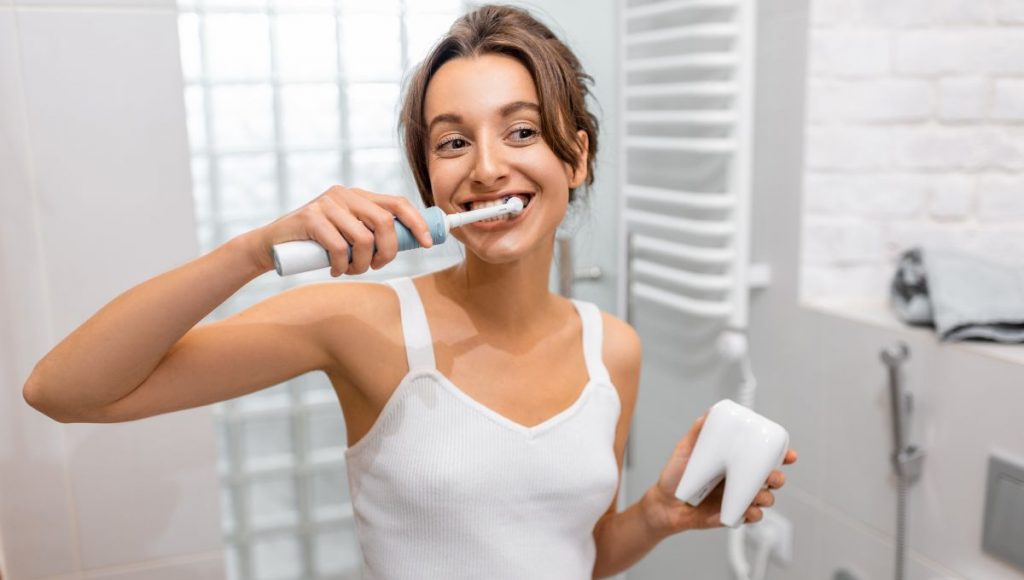
Maintaining excellent oral hygiene by brushing and flossing regularly is a must when wearing invisible braces (clear aligners). Food particles and plaque buildup under it can lead to bad odours, discolouration of the trays, and an increased risk of tooth decay or gum disease. Keeping your teeth and gums clean prevents this buildup from contaminating your aligners.
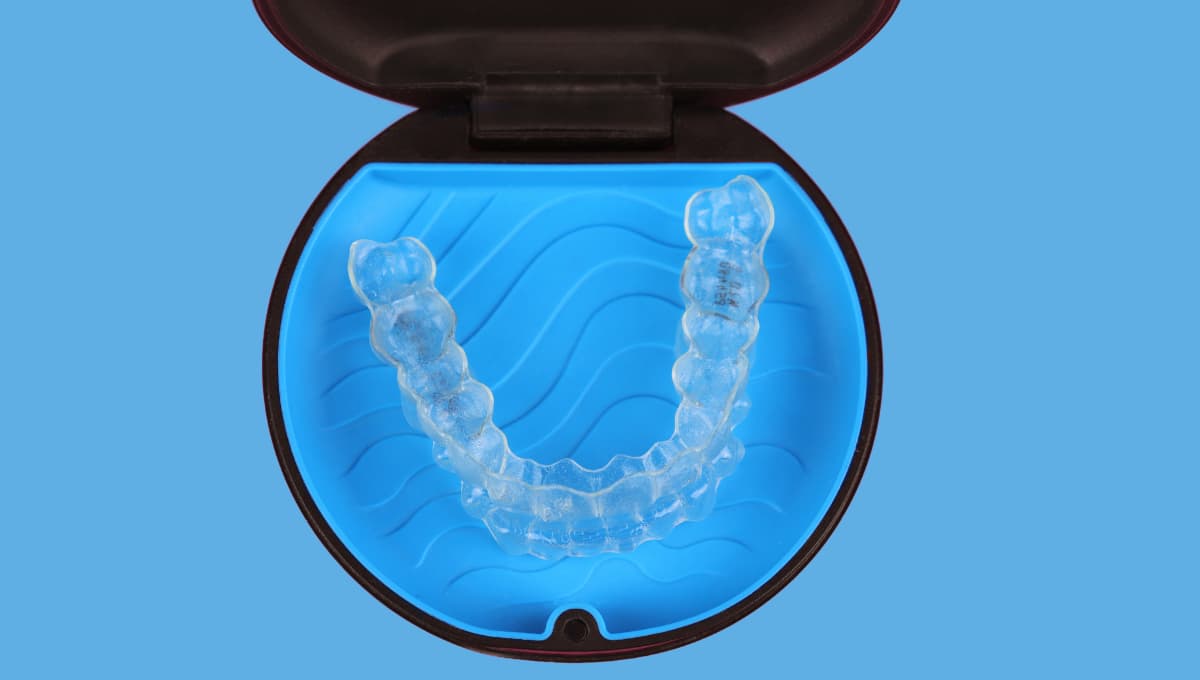
When not wearing, always store them in a vented retainer or aligner case. This protects the plastic trays from potential damage and allows them to fully dry between uses, preventing bacterial growth. Avoid wrapping aligners in napkins or leaving them out uncovered.
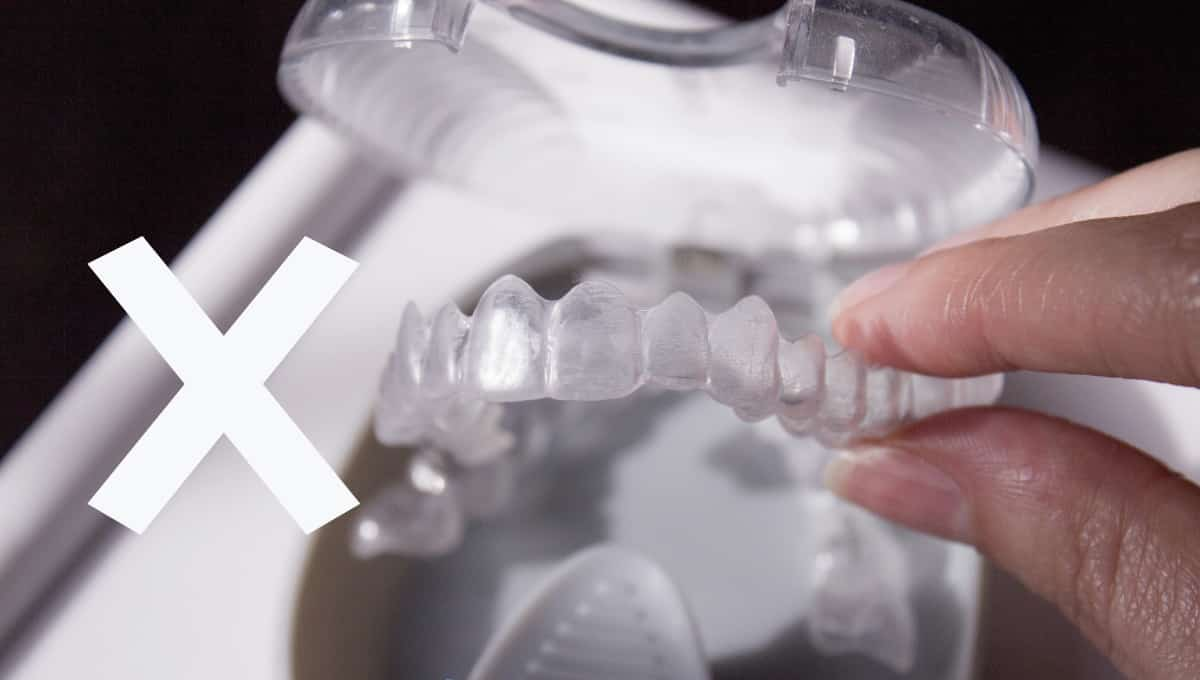
Do not use standard toothpaste, mouthwash, denture cleaners, baking soda, or vinegar to clean your aligners, as these products can be too abrasive. They may scratch, discolour, or damage them over time. Only use dental cleaning products specifically designed for aligners or retainers.
While cool water is safe for rinsing and soaking clear aligners, avoid exposing the plastic trays to hot or boiling water temperatures. The heat can cause the aligners to warp and become misshapen, resulting in an improper fit that derails your orthodontic treatment progress.

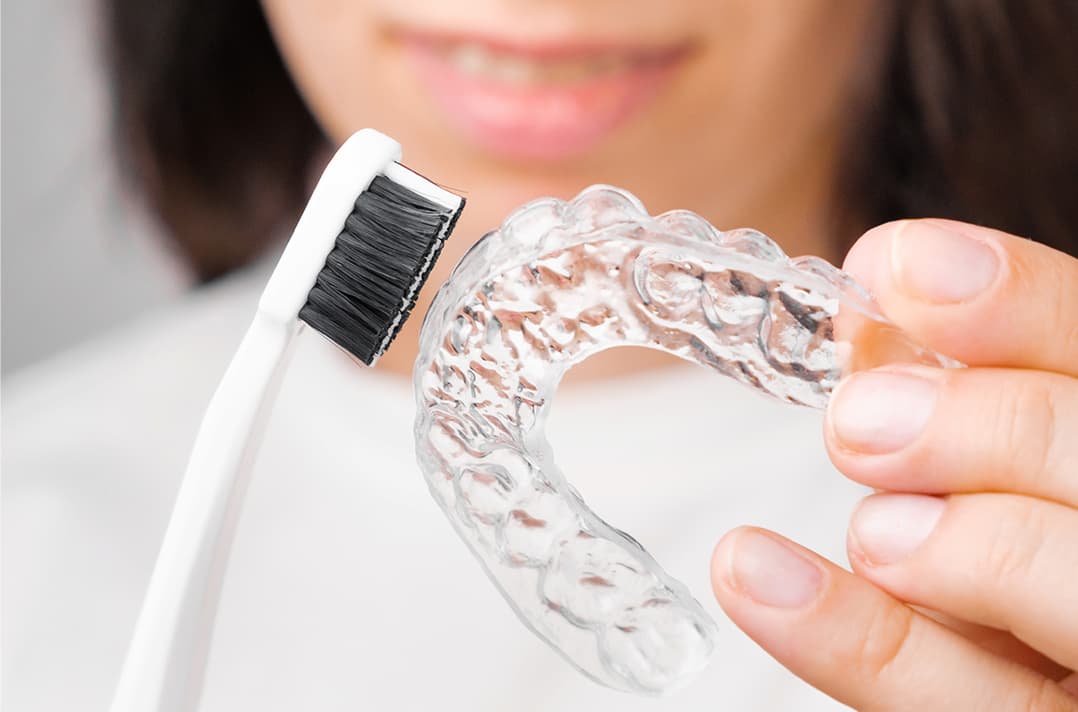
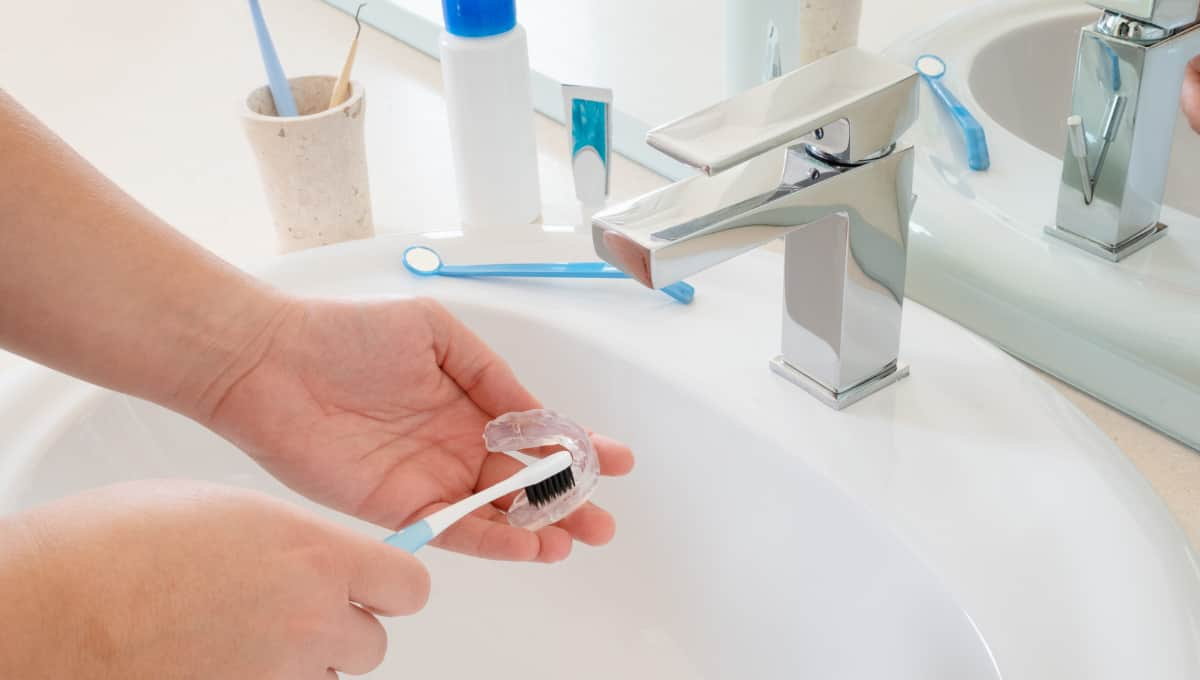
When brushing aligners, only use a soft-bristled toothbrush. The abrasive bristles of hard or medium toothbrushes can scratch and cloud the surface of the clear braces trays over time. A soft toothbrush is better as it provides gentle yet effective cleaning.

A critical rule for maintaining fresh, invisible aligners is to always remove them before eating or drinking anything other than plain water. Foods, beverages like coffee or wine, and dark-coloured liquids can easily stain, discolour, and promote bacteria buildup on the clear plastic trays.
Properly cleaning and caring for your clear aligners is vital during orthodontic treatment. Following the recommended dos and don’ts specific to your aligner brand helps avoid issues like staining, warping, bacteria buildup, and odours, which could hinder treatment progress. Consistently maintaining your aligners is key to achieving optimal orthodontic results.
If you’re considering clear aligner treatment, take advantage of the free smile assessment to see if invisible aligners are right for you and your smile goals.
Get a free consultation with your orthodontist today to explore your options and take the first step towards achieving the smile of your dreams. Your journey to a confident smile starts now!
What Is IPR? Interproximal reduction, often referred to as IPR, is a common technique employed in modern orthodontics to create ...
1 December 2025
Mouth breathing is more common than people think, and many don’t realise they’re doing it, especially while sleeping. Whether you’ve ...
24 November 2025
Have you noticed your smile looking a little dull lately? It’s very common for teeth to change colour over time, ...
17 November 2025
Have you ever woken up with a dry mouth or a scratchy throat? It’s uncomfortable, and sometimes even sipping water ...
12 November 2025
Cavities and tooth decay are among the most common oral health problems worldwide. They occur when the hard surface of ...
3 November 2025